Toyo Aluminium
Innovation
Innovation
Transforming electrical and electronic products from the inside
A new material with superior energy storage capacity
~Enhancing the performance of electrolytic capacitors with
"Power Laminated Foil"~
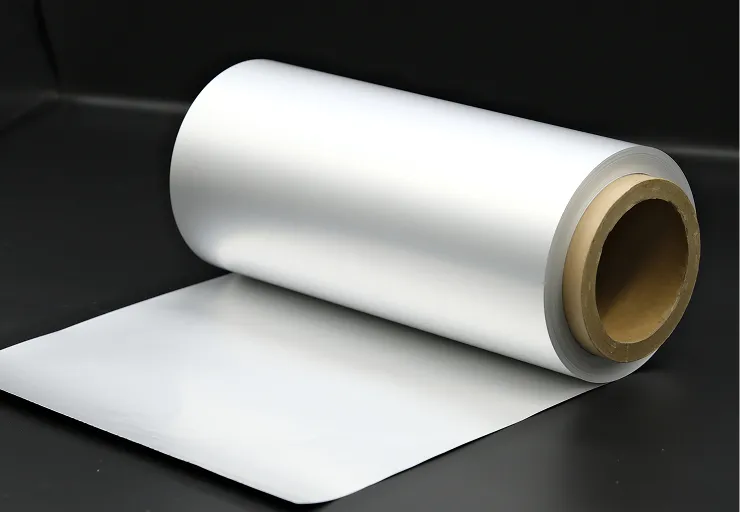
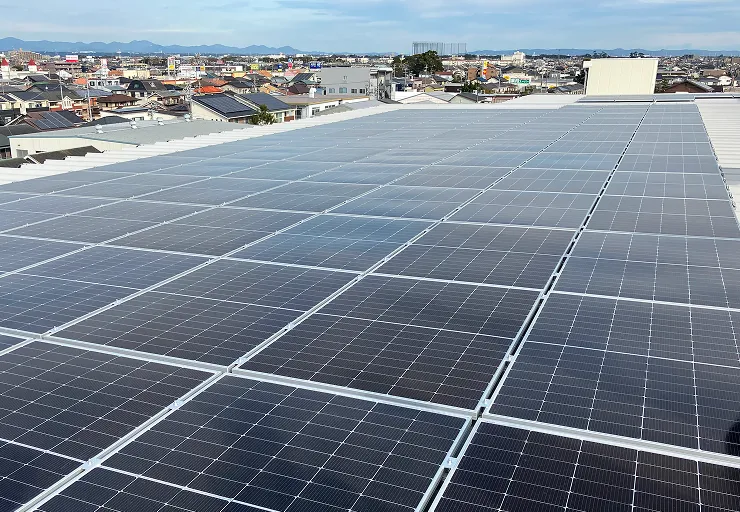
Electrolytic capacitors are used in many home appliances and electronic devices. In recent years, there has been a demand for higher capacitance and smaller sizes for these components, which store and instantaneously release electricity. Essential to such electrolytic capacitors is aluminum foil used as the anode foil. While etched products have been the mainstream until now, Toyo Aluminium has developed "Power Laminated Foil," which consists of aluminum powder sintered onto aluminum foil. We follow the story behind the birth of this new material, which achieves 1.6 times the capacitance of conventional products.
01/05
Toward Higher Functionality for Electrolytic Capacitors
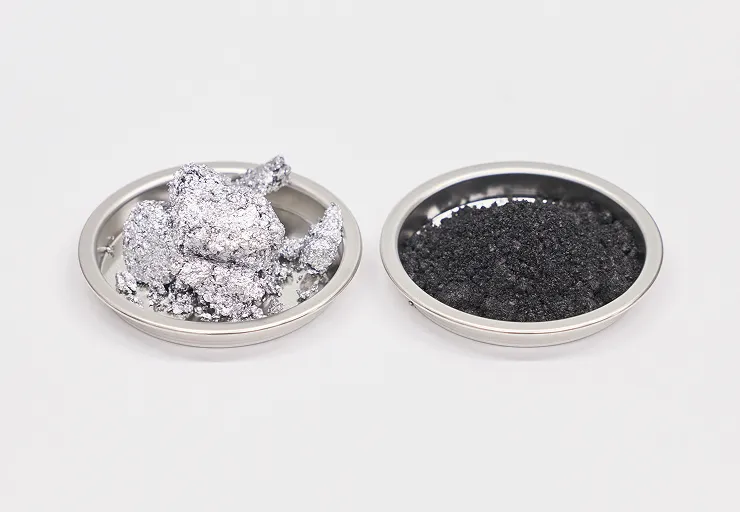
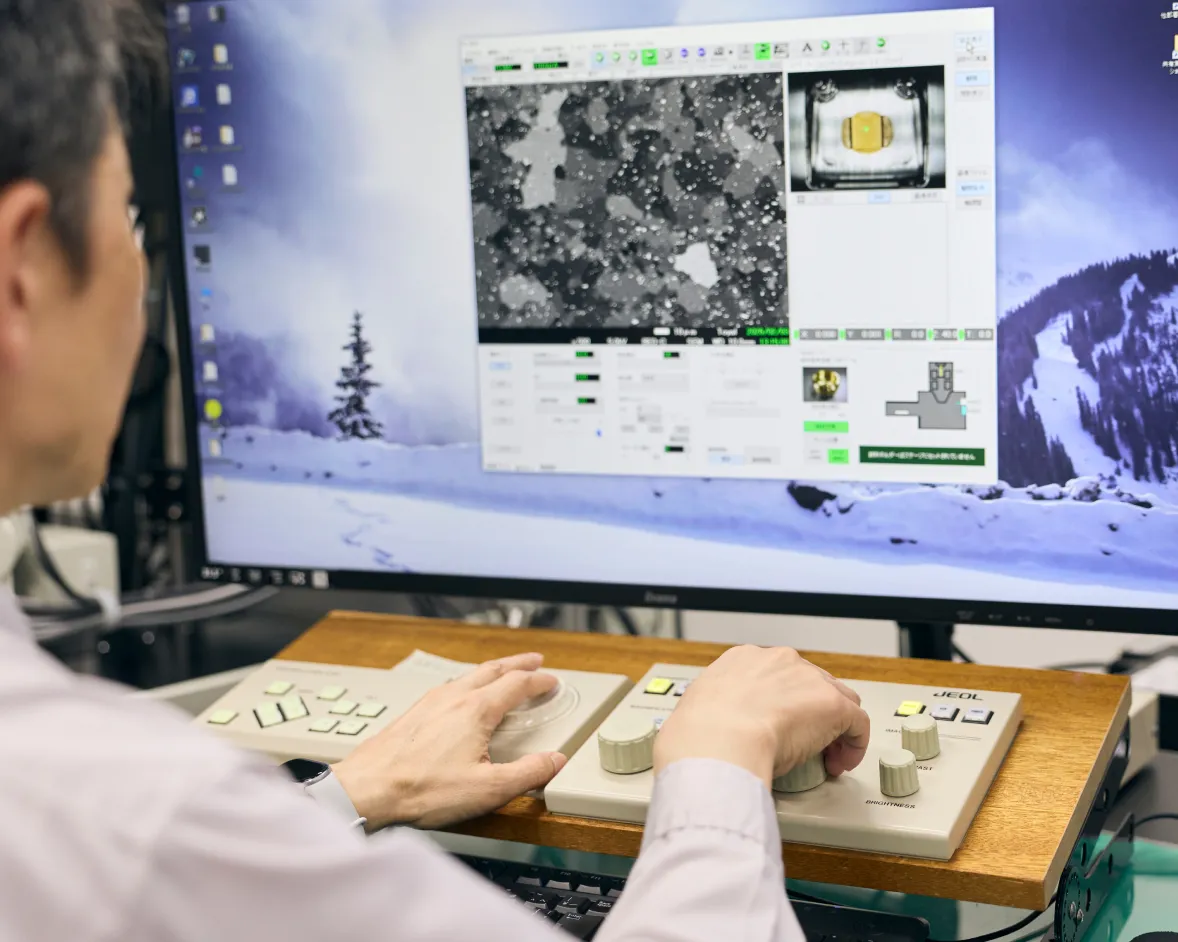
Could we develop an aluminum foil that can enhance the performance of electrolytic capacitors without using etching, which relies on the corrosive action of acids and gases? The development of Power Laminated Foil began with this question from an engineer. Conventional anode foil for capacitors have improved capacitance by increasing the thickness of the aluminum foil and adjusting etching conditions to increase surface area, but they faced the challenge that it was extremely difficult to maintain a balance between expanding surface area and maintaining strength as the aluminum foil became thicker. For capacitor manufacturers, there was also the burden of having to handle the etching process in-house. In addition, there are environmental disadvantages due to the generation of waste liquid from the use of acid. Thus, the idea born from Advanced Technology Division was to sinter and laminate aluminum powder onto aluminum foil. This inspiration, unique to a company that handles both foil and powder, would later come to fruition as a product that would be a game-changer in capacitor development.
02/05
New Material Development Driven by a Three-Way Partnership
The development of Power Laminated Foil was a series of countless prototypes. In the early stages of development, various methods were tested, such as selecting specifications for aluminum powder and resin, eventually succeeding in creating a porous structure with high energy storage capacity. The biggest challenge that stood in the way was finding the optimal conditions for applying the aluminum powder. "When applied at the thickness requested by the customer, it could not be wound as a coil under the previous conditions. We adjusted it to minimize drying as much as possible to allow for winding, but it was extremely difficult to achieve the required thickness, as it would either not dry enough or dry too much," said Mr. S of Advanced Technology Division, who was involved in the commercialization from the very beginning. While there were internal efforts (described later), the challenge of contributing to the high functionality of electrolytic capacitors continued with the cooperation of customers, including end users. Power Laminated Foil appeared on the market in 2012. About five years had passed since the start of the project.

03/05
A Production Revolution Brought About by a Change in Thinking
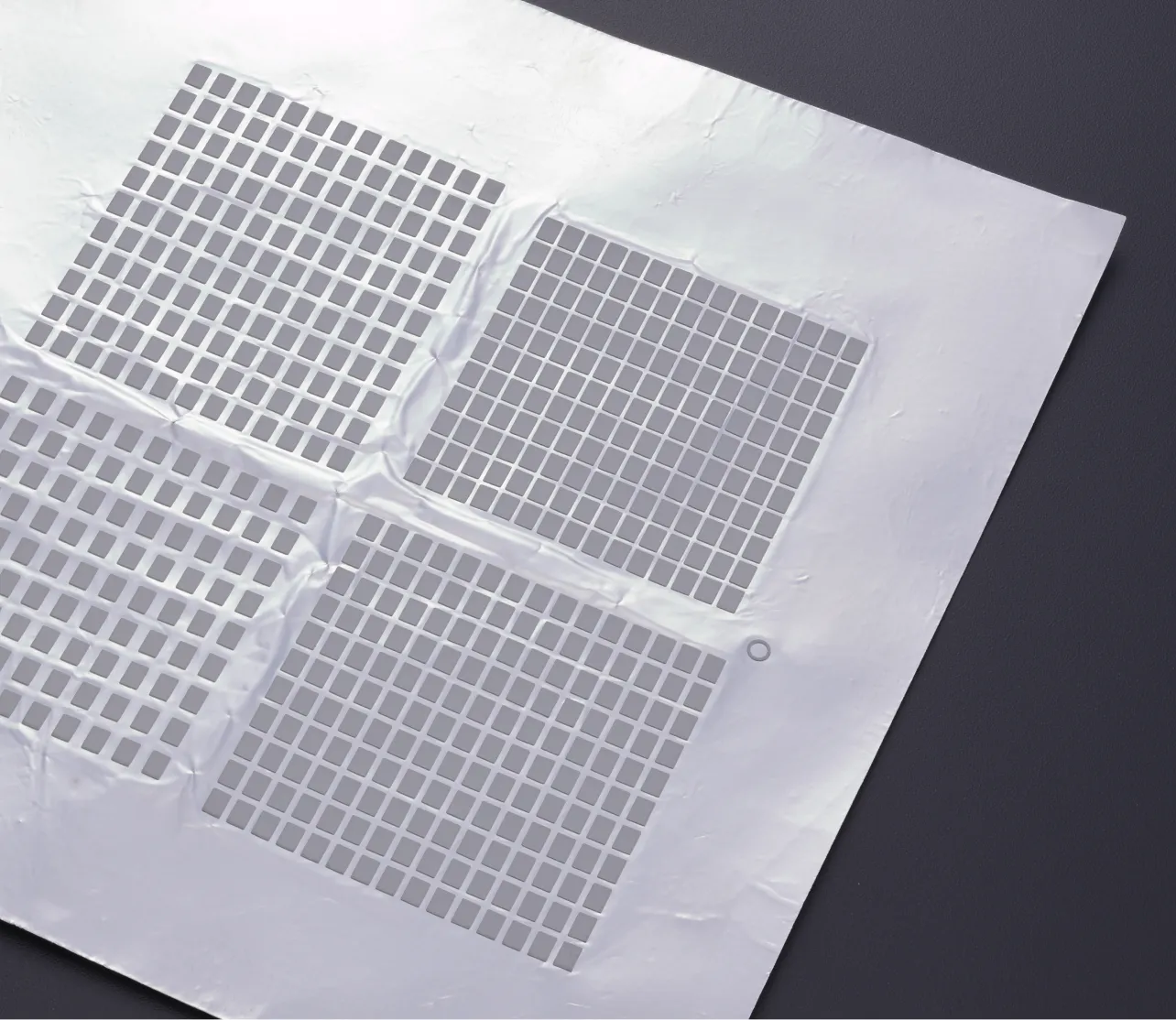
Typically, aluminum foil is shipped in rolls to ensure mass-producibility. Breaking away from this "norm" became a major turning point in the practical application of Power Laminated Foil. Attempting to produce a coating of a certain thickness or more in roll form inevitably leads to cracks and peeling on the surface. Amidst this, S says, "My supervisor at the time advised me to try using a sheet-fed printing machine at an outside contractor, so we changed the manufacturing conditions to 50-centimeter square sheets. This was a huge factor." The defects that had been a source of trouble until then were dramatically improved. Furthermore, the amount of ink that could be applied increased, making it possible to form the thick, high-capacity layers that meet today's market needs. However, unlike roll-based products, sheet-fed products involve many manual processes, which significantly increases labor and costs. "We were truly lucky to have customers, including end-users, who understood that and adopted it," says S. The manufacturing of anode foil using conventional etching had a history of about half a century. The challenge of rewriting the technology can truly be said to have rewritten history itself.
04/05
A New Material That Greatly Surpasses the Performance of Conventional Products
After much hard work, the Power Laminated Foil was finally released to the world and has been well-received by end-user medical device manufacturers. It achieves approximately 1.6 times the energy storage capacity of conventional products, contributing significantly to the miniaturization of capacitors and the space-saving of the equipment in which they are installed. Furthermore, unlike roll-type products that are thousands of meters long, it can be processed in detail, offering the advantage of being molded into different shapes for each capacitor before shipment. The reduction in the burden on the user side was welcomed. Although the product involves human intervention in many processes such as coating, visual inspection, and packaging, the production system has gradually taken shape along with the increase in orders. As a result, this has led to further increases in orders. In addition, it should not be overlooked that a relationship of trust has been built with users and their end-users through repeated negotiations. The product, which has taken on new value, has also created the invaluable value of human connection through manufacturing.

05/05
Continuing to Walk Toward the Flowering of Further Possibilities
While we speak of electrolytic capacitors in a single breath, their applications are diverse. Accordingly, the performance required of the Power Laminated Foil also changes. Currently, Toyo Aluminium is continuing relentless research to expand the application range of the Power Laminated Foil. In addition, automated testing is underway for some processes. According to Mr. A, "Compared to our total production volume, the Power Laminated Foil is a niche product that accounts for less than 1%." Even so, as long as people rely on electricity to live, there is no doubt that it is a socially necessary product. Mr. S is also positive, stating, "I believe the potential of the Power Laminated Foil is still far greater than this." Meeting the needs of the world and rewriting them into something beyond imagination, Toyo Aluminium and the engineers gathered there continue to polish their wisdom and technology.

Related Products

Power Laminated Foil
Regarding technology and products
Contact Us
Please feel free to contact us for inquiries regarding our technology and products, or to request samples.