Toyo Aluminium
Innovation
Innovation
Change the surface, expand the possibilities.
A "new option" that transcends the limits of aluminum
~"RANAFOIL," which fundamentally supports
new product and cutting-edge technology development~
"It's difficult with aluminum." In the manufacturing field, there are areas where this has been the standard judgment. Toyo Aluminium's "RANAFOIL" is an aluminum foil with a special surface structure that could not be achieved with conventional rolling processes. It connects materials that would normally be difficult to bond, making previously impossible structures possible. However, its features cannot be explained by a single application. This is because RANAFOIL is a material that demonstrates its power when faced with "challenges that existing technologies cannot handle." RANAFOIL is expanding the possibilities of aluminum at the forefront of development. We followed its features and the background of its development.
01/05
It's not just "rough." The moment aluminum turns into a "bonding material"
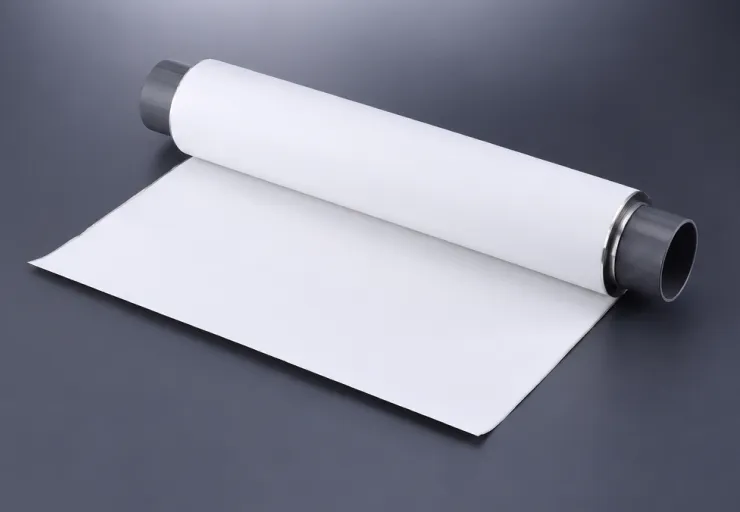
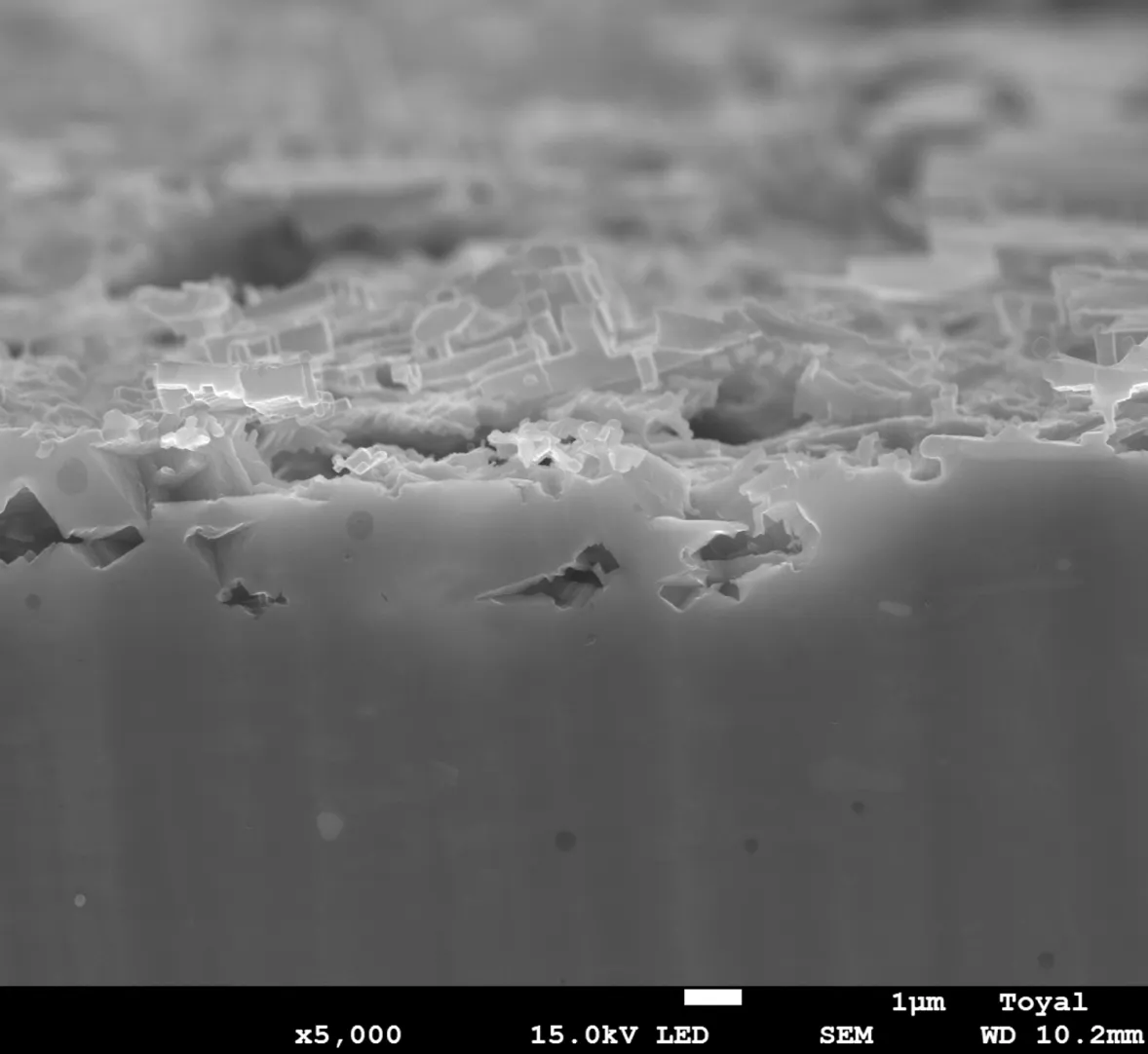
The first thing you notice about RANAFOIL is the texture of its surface. Unlike typical aluminum foil, it has a unique roughness. "This 'roughness' is exactly what makes RANAFOIL special," says the Mr. S from the processing Technology Development Team, who has been involved in the development and market expansion of this product for many years.
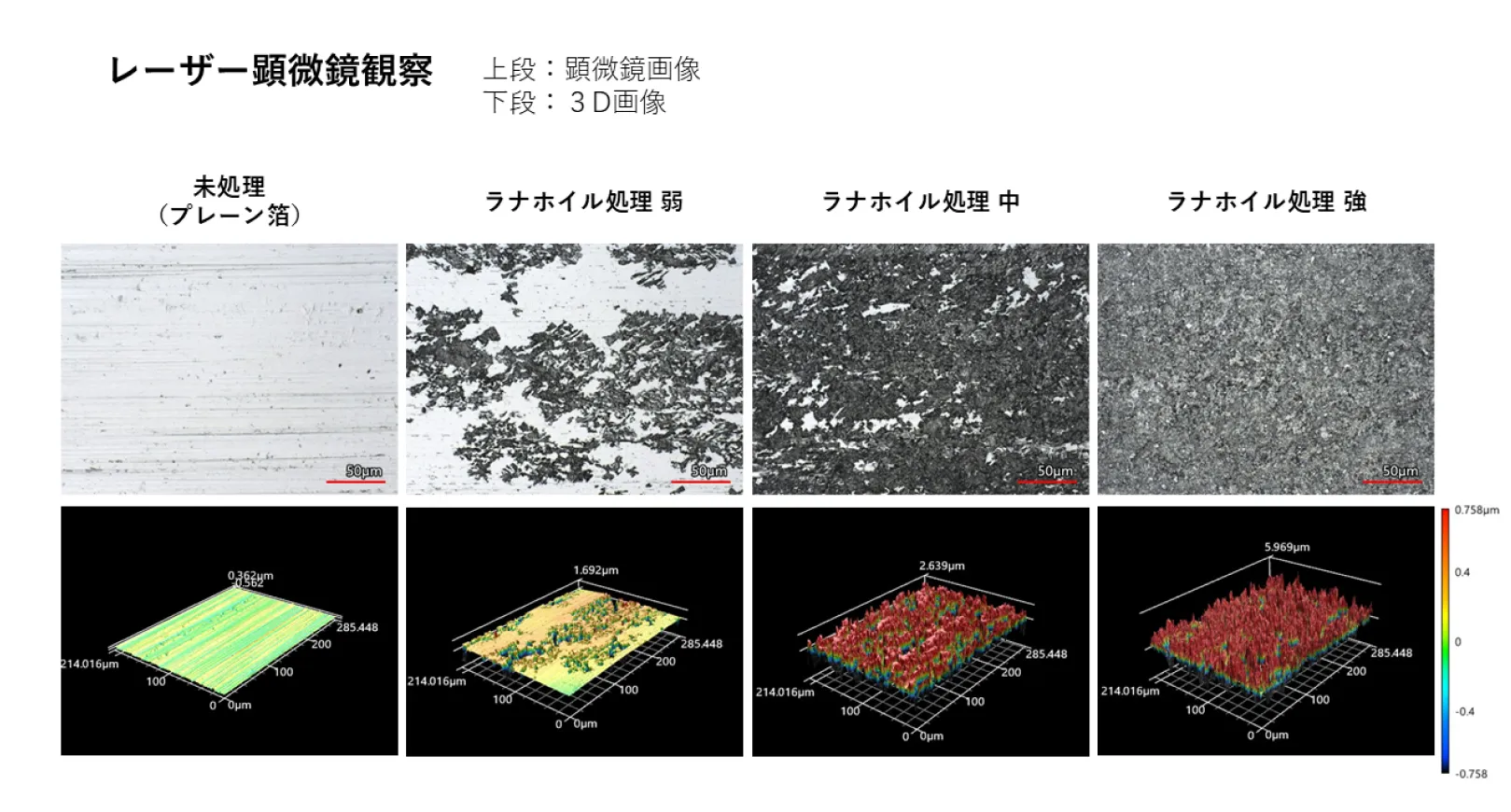
Aluminum foil is made using a method called "rolling." This is a process where metal is thinned out using large rolls, and the condition of the rolls is reflected on the surface. Therefore, while a certain degree of pattern or texture can be created, there are limits to what can be expressed. "RANAFOIL is what we achieved through post-processing to create a surface structure that cannot be made by rolling alone."
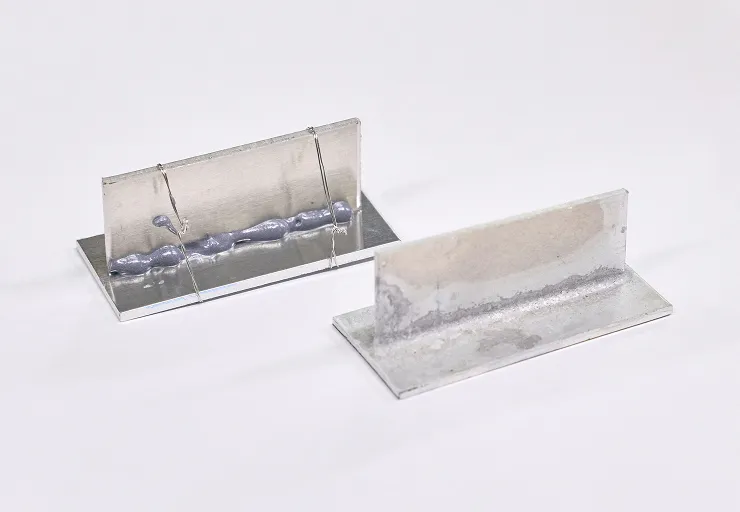
RANAFOIL forms a special uneven structure through a unique surface treatment. This structure creates characteristics not found in conventional aluminum foil. One is high wettability due to capillary action, which allows liquids to spread naturally. The other is the anchor effect exhibited after hardening. By allowing materials to penetrate deep into the irregularities, it creates a state that is difficult to pull out, much like a rivet. In other words, the aluminum becomes a "material that is easy to bond to."
02/05
Why focus on a long-standing product now?
What is interesting is that RANAFOIL itself is by no means a new technology. The idea has existed for quite some time and had even been commercialized. However, for a long time, the markets and applications where it could demonstrate its value were limited. "There were not many situations where its features were truly needed yet." For example, in food packaging, there are clear values such as "preventing oxidation" and "improving shelf life." On the other hand, the special surface structure that is the strength of RANAFOIL was not necessarily required for applications that could be sufficiently handled by conventional aluminum foil.
However, the tide has turned. In recent years, the performance required of materials in fields such as electronic components, telecommunications, and batteries has become more sophisticated. As challenges that are difficult to address with conventional materials have increased, the features of RANAFOIL, such as increased surface area and improved adhesion, have begun to attract attention as new value.
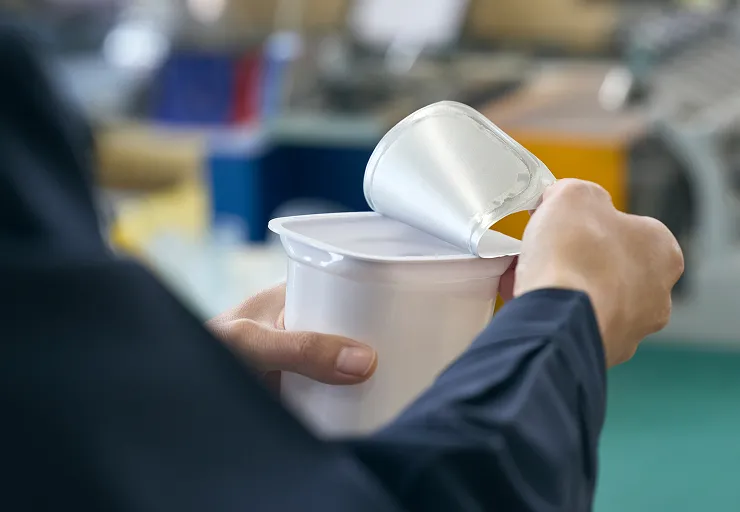
RANAFOIL is not a material with a clearly defined application like a yogurt lid. Nor is it a product aimed at users who are already satisfied with current rolled aluminum foil. It is a material that demonstrates its true worth when challenges that are difficult to address with existing technologies arise.

03/05
A solution that appears only at the moment when "aluminum cannot be used"
At the cutting edge of development, as technology evolves, new challenges arise. These include problems such as "high-performance materials not adhering well," "peeling occurring during miniaturization," and "conventional processes no longer being viable."
Especially in the field of electronic components, there are many cases where an insulating layer cannot be inserted. "We want to make it adhere, but we cannot insert anything." RANAFOIL attempts to respond to such difficult conditions with the "surface structure of the material itself." In fact, the surface structure of RANAFOIL is also being applied to a technology called "ALU-SAP" currently being developed by Toyo Aluminium. It is a technology expected to offer new possibilities in the field of communications.
Of course, using RANAFOIL does not solve everything. The required roughness, base material design, and necessary performance differ for each customer. Therefore, this material cannot be sold simply through a catalog. "It is a feeling of creating it together with the customer, with the premise of making improvements," says the Mr. S.

04/05
More than just a material—the concept of a "material we design together"
RANAFOIL is less of a mere product and more of a "base material for development." We adjust everything from the base material design to the manufacturing method according to the application, including the scale of roughness, thickness, conductivity, and strength. "For each project, we become something like a development partner."
In fact, our interactions with customers are a bit different from typical material sales. Instead of proposing a finished product, we start by sharing "what they want to achieve." Mr. S himself admits that when he was first in charge of sales, he was confused about how to make proposals. Even so, he was strongly attracted to the potential of RANAFOIL. "I thought it was a waste for such interesting technology to remain buried." So, he reviewed how to create materials and explain things from scratch. Then, little by little, the customers' reactions began to change. He says he started hearing the same sentiment he felt: "This is interesting."
Of course, being "interesting" does not automatically lead to commercialization. In many cases, additional development or optimization is required afterward. Even so, those reactions have led to the next themes.
05/05
What is needed is when you hit a limit
RANAFOIL is not a general material for mass consumption. It is only needed in situations where one thinks, "It just won't adhere," "There are no material options," or "The current method has reached its limit."
On the other hand, it is also an "option for exceeding limits." In fact, we have received inquiries such as "I want to bond materials that are difficult to adhere to aluminum" and "I want to create a sponge-like aluminum foil that allows liquid to penetrate."
The applications are not yet fixed. The finished form is also still to come. Even so, the desire to "expand the possibilities of aluminum" remains consistent. "What do you want to create? We want to think about that goal together." The challenge of RANAFOIL continues even now.

Related Products

Ranafoil™
Regarding technology and products
Contact Us
Please feel free to contact us for inquiries regarding our technology and products, or to request samples.