Toyo Aluminium
Innovation
Innovation
Open, close, and open again.
A challenge to create a new standard!
~Behind the scenes of the development of the resealable packaging material
"Toyal Reseal"~
Once a food package is opened, it cannot be closed again.
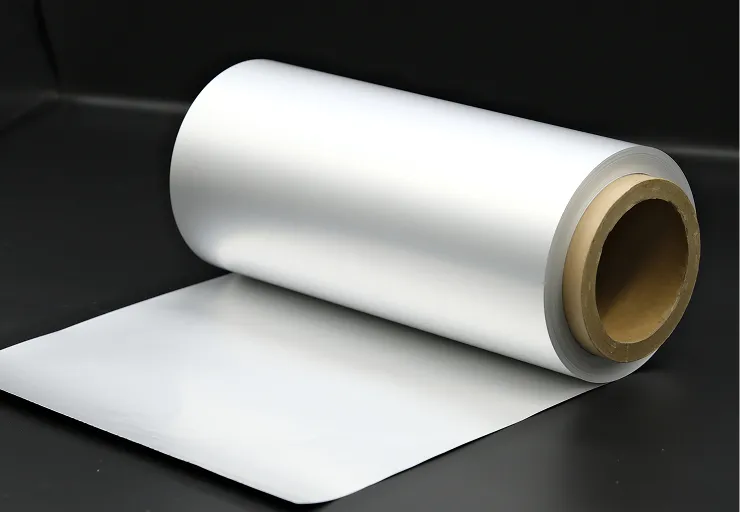
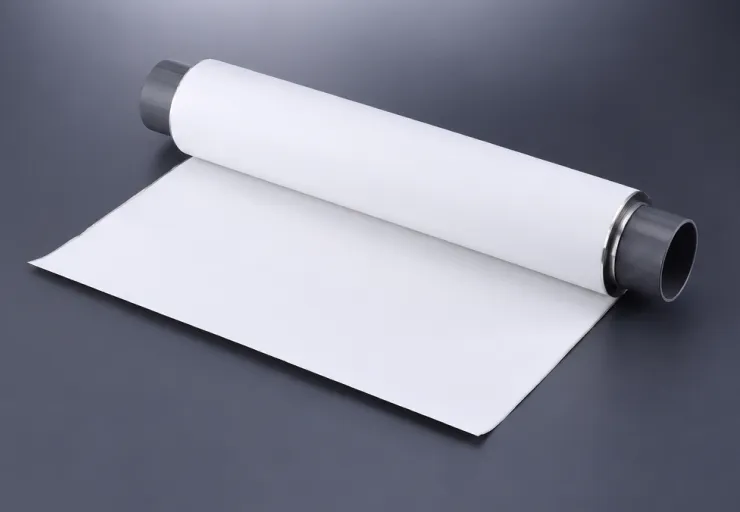
To change such "common sense," Toyo Aluminium took on the challenge of developing a new packaging material. "Toyal Reseal" can be easily resealed just by pressing it with your hand. However, behind it lay the difficult challenge of achieving two contradictory properties: "Sealing performance" and "resealability." Over 100 prototypes, searching for materials, and numerous failures. How did the technology that is changing the way people open packages come into being? follows the story of its development.
01/05
Once opened, it's over. It's time to change that.
I take a fresh look at the packages lined up in the food section. Yogurt, snacks, seasonings—they are all essential items in our daily lives. However, most of them share a common trait: once you open the lid, you cannot put it back the way it was.
After opening, people have dealt with this inconvenience by covering them with plastic wrap, securing them with rubber bands, or transferring the contents to separate containers. In other words, consumers have accepted the premise that "once it's open, that's it." "Everyone thought it was inconvenient, but it had become the norm," says Mr. S, who works at Gumma Works of Toyo Aluminium. What Mr. S and Toyo Aluminium took on was precisely the rewriting of that "norm."
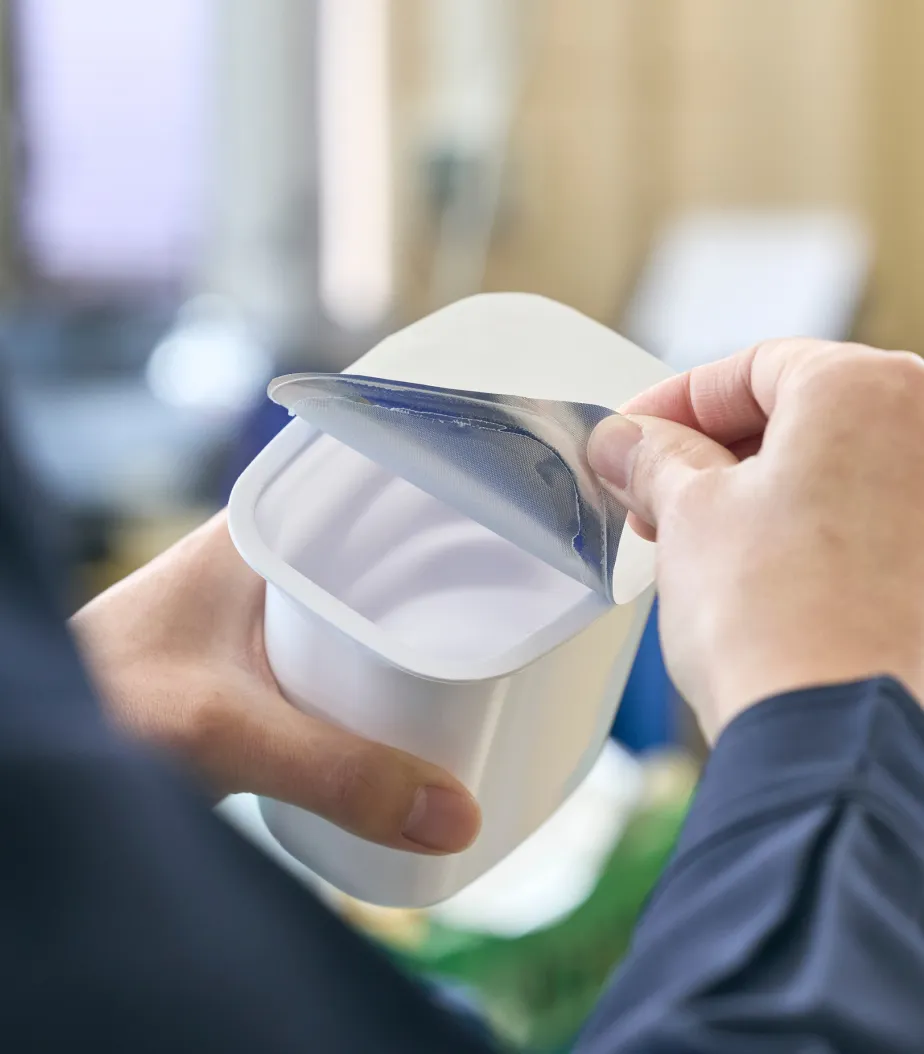
"Toyal Reseal" is a packaging material that can be resealed simply by pressing it with your hand. You can open it, and then close it again. It is a simple function, but one that had been difficult to achieve until now.If this technology becomes widespread,food preservation will improve, and food waste from leftovers will decrease. Furthermore, if auxiliary parts like outer lids are no longer needed, it also leads to a reduction in plastic. It could be called an innovation sought not only by companies but also on a national level.However,behind it lay a far more complex and painstaking development process than one might imagine.

02/05
Sealing performance, or ease of opening?
Balancing two seemingly incompatible requirements.
In the early stages of development, the team faced a simple yet deep-rooted problem. balancing "sealing performance"and ""resealability"To increase sealing performance, it is inevitably necessary to strengthen the adhesive force. However, that requires significant force when opening, which can sometimes damage the container.
On the other hand, if you prioritize ease of opening and weaken the adhesive force, it cannot securely sealing performance when closed. It was like a tug-of-war. "If you pull one up, the other drops," Mr. S recalls of the trial and error at the time.
Furthermore, conditions unique to food packaging also weighed heavily. Because heat sealing is performed during the manufacturing process, it must be able to withstand high temperatures. During distribution, it is exposed to refrigerated and frozen environments, as well as the pressure of atmospheric changes. Of course, it must also clear food hygiene standards. In addition, compatibility with container materials is a factor that cannot be ignored. It needs to demonstrate stable performance across diverse materials such as paper, plastic, and aluminum. It had to be not just a "convenient film," but a "product that functions as packaging material." Those conditions raised the difficulty of development all at once.
03/05
Over 100 prototypes. Development that began with searching for materials.
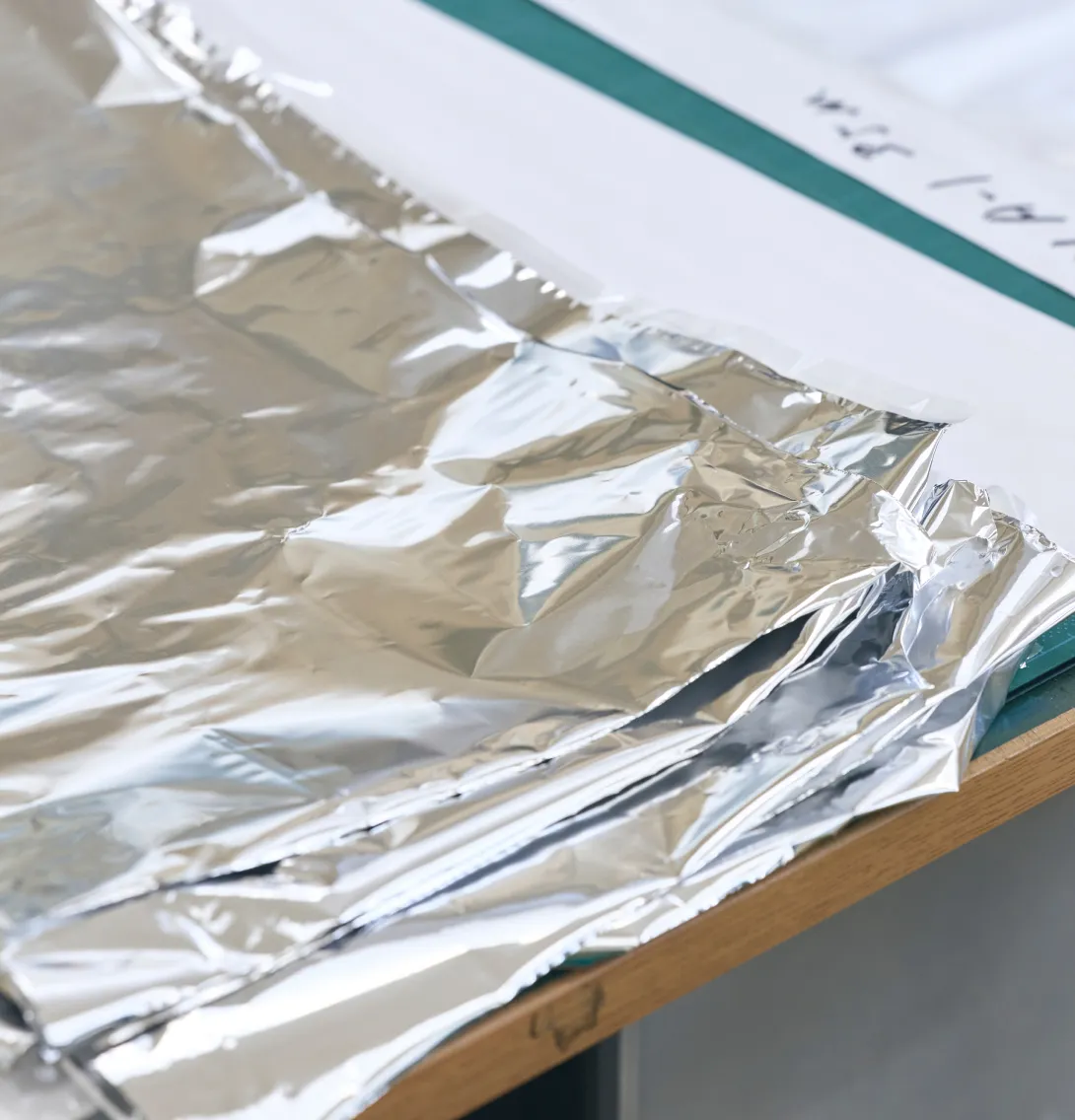
The most important thing in development is the "material." There are many materials in the world that have adhesive properties. However, those that are safe for food use, possess both processability and heat resistance, and also clear intellectual property issues—those that satisfy all of these—were extremely limited. "It seemed like there were many candidates, but there were very few that could actually be used," Mr. S recalls quietly.
Even more difficult was achieving the "just right" level of adhesiveness. If it were too strong, the surface of the container would peel off when opened; on the other hand, if it were too weak, the sealing performance property could not be maintained even after resealing. In the laboratory, prototypes combining various materials were created one after another. While collaborating with film manufacturers and material suppliers, they changed conditions, altered structures, and tested repeatedly. As a result, the number of trials easily exceeded 100. "The moment I thought it was going to work, another problem would arise," Mr. S said with a wry smile, looking back on those days. Even so, with each repeated prototype, they inched closer to their ideal. The feel when opening, the sense of adhesion when closing—the team accumulated that delicate balance as a shared intuition.

04/05
This is it! The breakthrough the team achieved.
The turning point was an encounter with a certain material. A new adhesive material. That alone did not solve everything. However, by combining it with the packaging design know-how that Toyo Aluminium has cultivated over many years, the situation changed completely. Through structural ingenuity, the way adhesive force is applied can be controlled, allowing it to peel smoothly when opened and adhere firmly when resealed. Such ideal behavior began to emerge. "I will never forget the moment I first felt it 'closed properly'." Mr. S's voice brightened slightly. Facing that prototype, the members silently opened and closed it repeatedly. Open. Close. Open again. No matter how many times they tried, the functionality was maintained. "Someone said 'This is it,' but I think everyone was thinking the same thing."
This project was a small challenge that started with just two people: Mr. S and a new employee. But at that moment, the entire team had reached a milestone. The idea of a "resealable packaging material" had finally taken on a concrete form.
05/05
To create a new "standard"
That said, commercialization is not the goal. It is closer to the start. Cost optimization, further improvement in durability, stability during mass production, and market penetration. There are still many challenges left to clear. "The technology has taken shape, but making this the norm is the next step," says Mr. S.
What Toyal Reseal aims for is not to be a special feature, but to become the "standard." There is potential for it to spread to all kinds of food packaging, not just yogurt, but also snack foods and seasonings.
The essence of this technology lies not in "flashiness" but in "naturalness." It is a product that blends into daily life without you noticing, and before you know it, becomes an indispensable presence. "I want to create a future where 'if you open it, you can close it' becomes normal." Mr. S's words were quiet but contained a certain sense of conviction.
The challenge continues. And beyond that, a "new normal" awaits.
Related Products

TOYAL LOTUS®
Regarding technology and products
Contact Us
Please feel free to contact us for inquiries regarding our technology and products, or to request samples.